It started with mud. Gloriously messy, squishy mud. The kind children are drawn to the way moths are drawn to a porch light. They felt it between their toes, used it to paint all the outdoor toys — and it wasn’t long before their questions began to form: Why is the mud so sticky? Why does it feel so gooey? Do worms like mud?
That spark of curiosity seemed like the perfect beginning to an inquiry, and so our soil science project began.
The Ground Beneath Our Feet
The first thing we did was head out to our backyard playspace to gather soil from different areas. It felt great to dig our hands into the earth and see what we could find!
And the children noticed things immediately.
A pebble. Small roots that someone thought were worms. And something more surprising: old cherry seed shell casings, remnants of a cherry tree that no longer stands in the yard but whose presence is still held in the soil beneath our feet. The ground, it turns out, is not empty. It is full of memory. Full of life. Full of things becoming other things, slowly and without fanfare, right beneath where we walk.
This is the teaching of Wisdom: knowing that what we cannot see is still real, still present, still worth paying attention to.
A Sealed World: The Backyard Terrarium
The soil went into glass jars, layered over pebbles for drainage, and sealed shut. The invitation was simple: let’s see what’s already living in here.
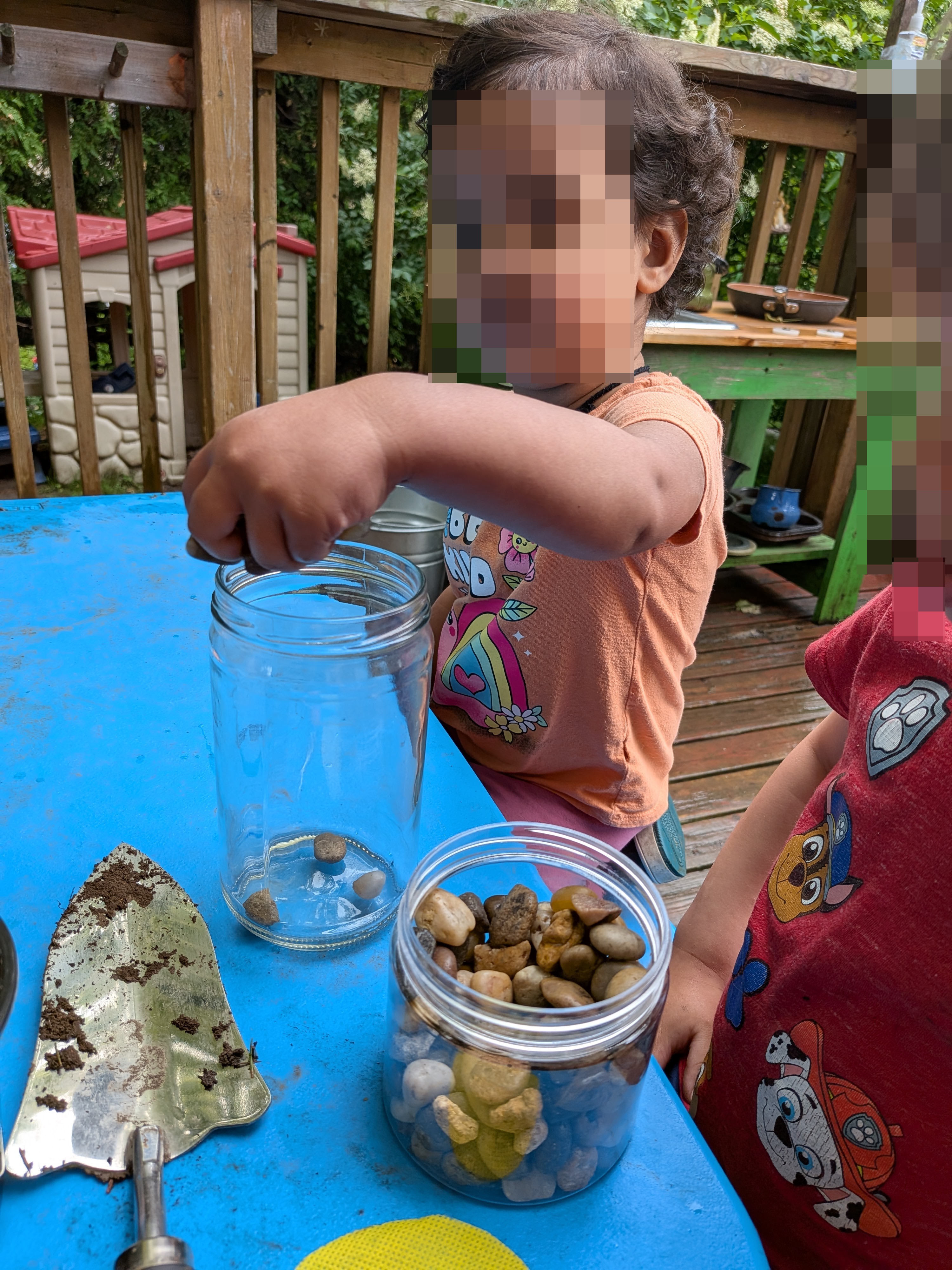
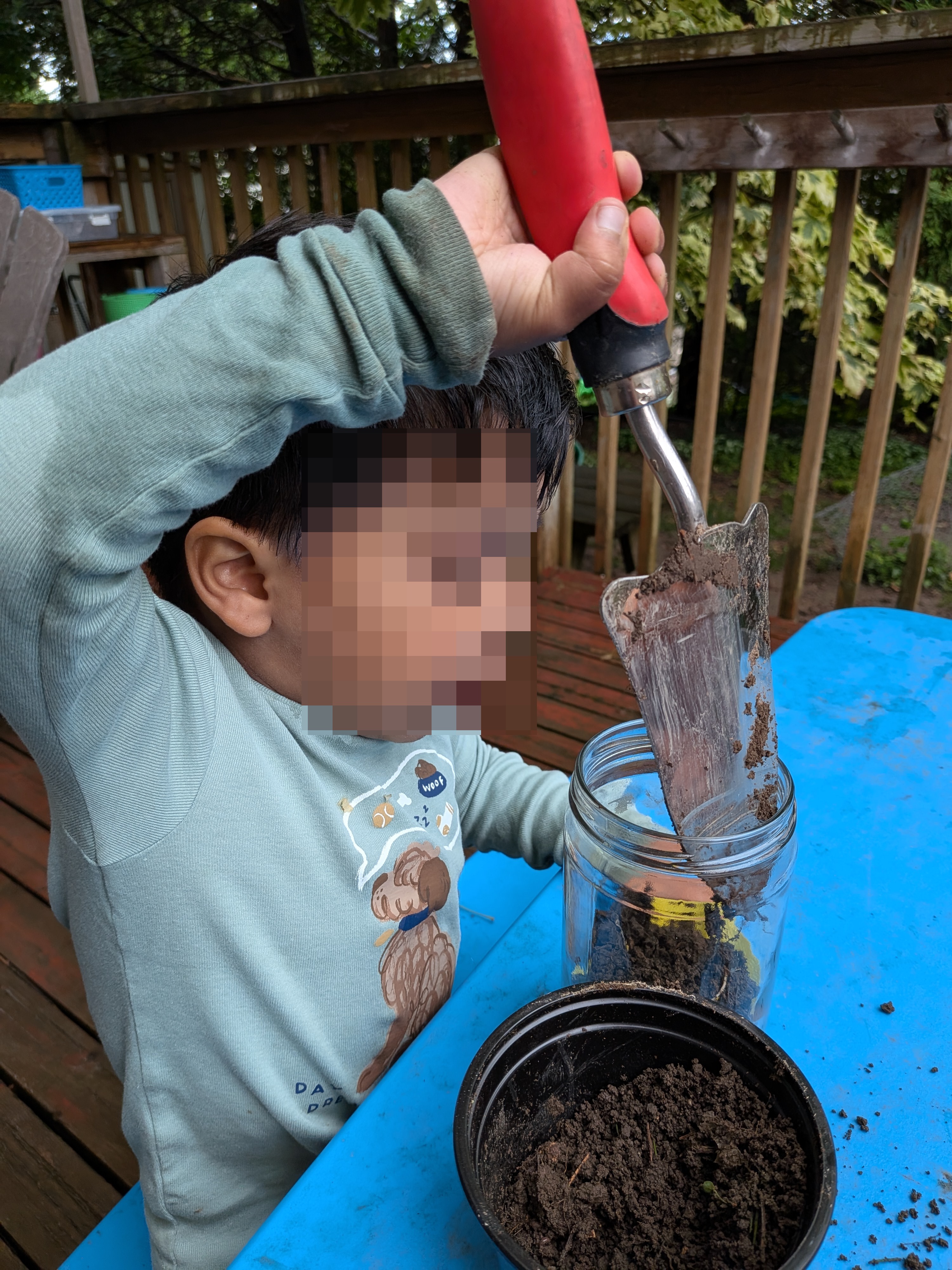
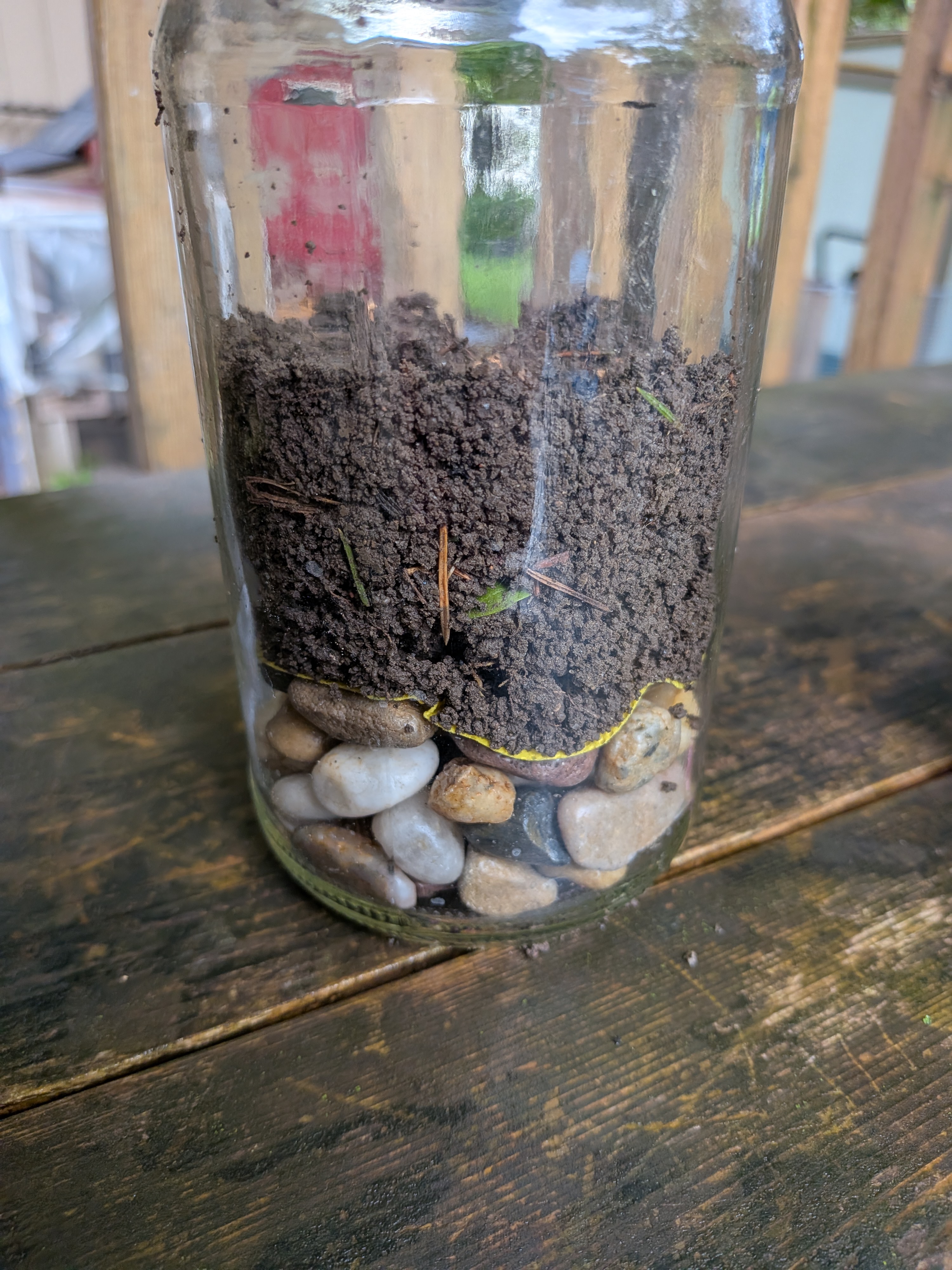
We set the terrarium on a shelf in the classroom, with magnifying glasses nearby, so they could stop and look close up at the little world inside the jar. It was amazing how frequently they found their way there to see what was growing and the little creatures that live in the soil.
Clay: The Sticky Truth About Soil
We talk about soil like it’s simple. Dirt. The stuff on our shoes. But soil is actually a whole community: minerals ground down from rock over thousands of years, organic matter that used to be plants and animals and is now something else entirely, water and air hiding in the tiny spaces, and billions of bacteria, fungi, and organisms living in every handful. It is one of the most complex things children will ever hold in their hands.
Clay is one part of the soil, and I knew the children would find joy in exploring it.
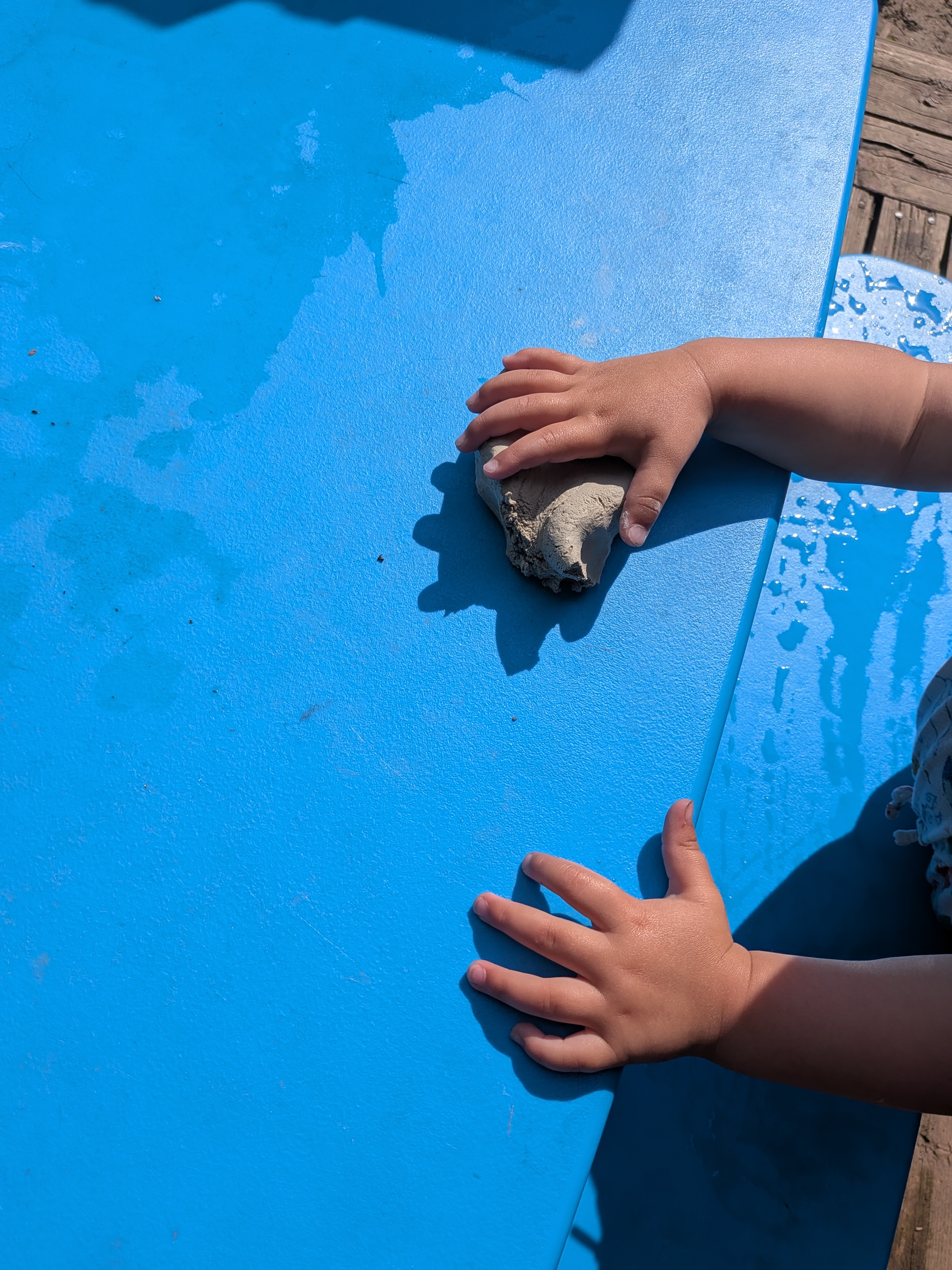
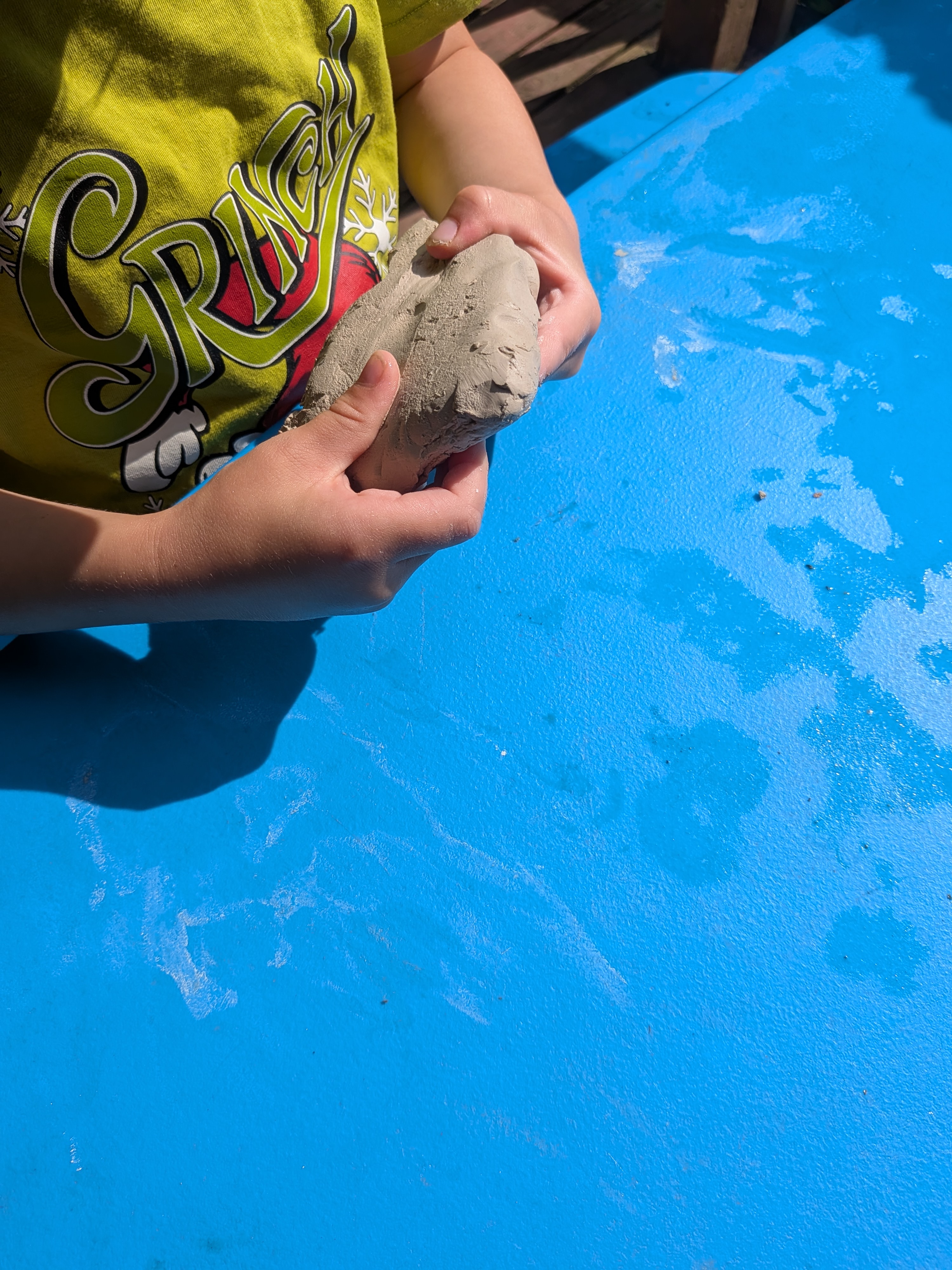
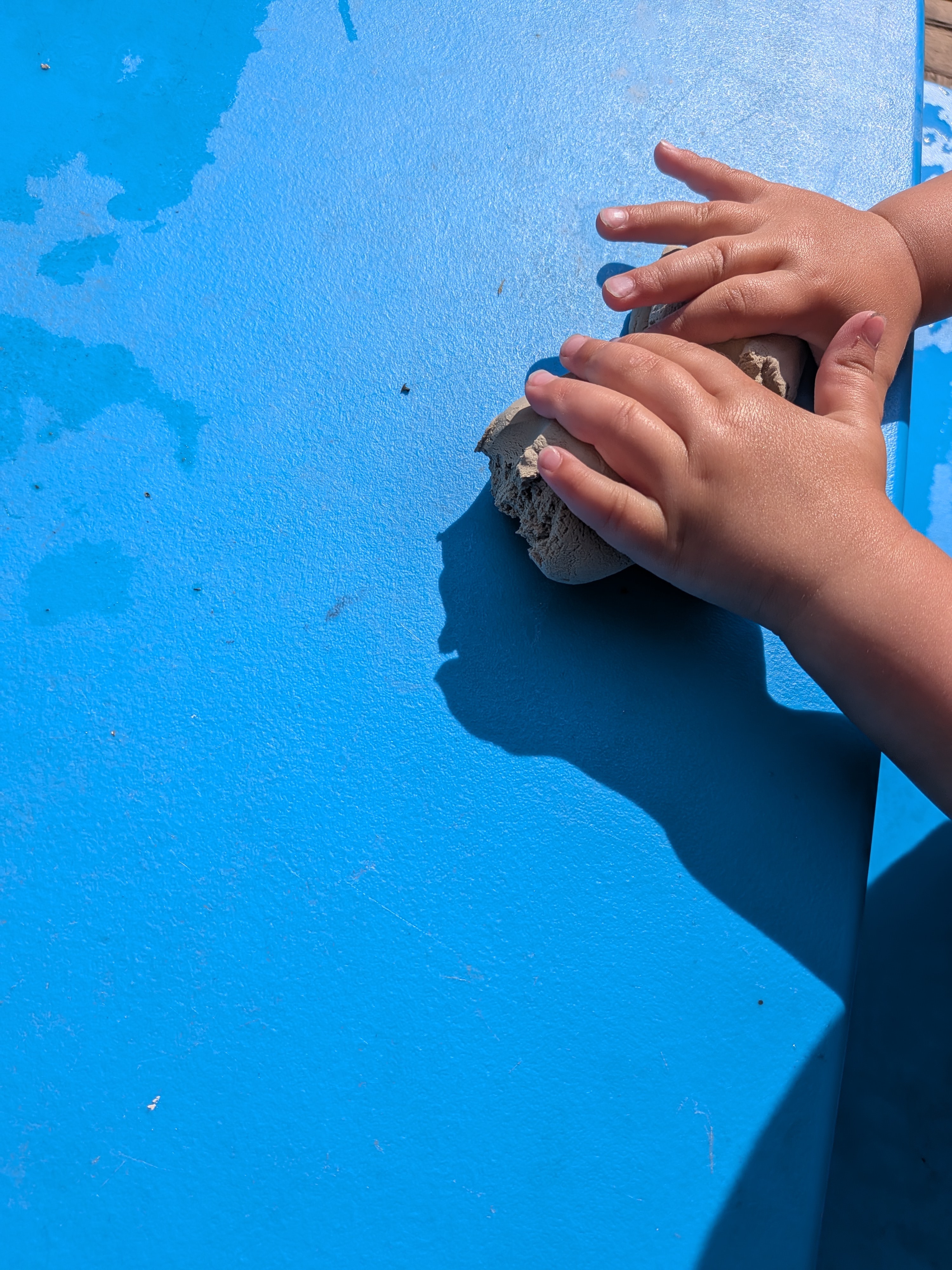
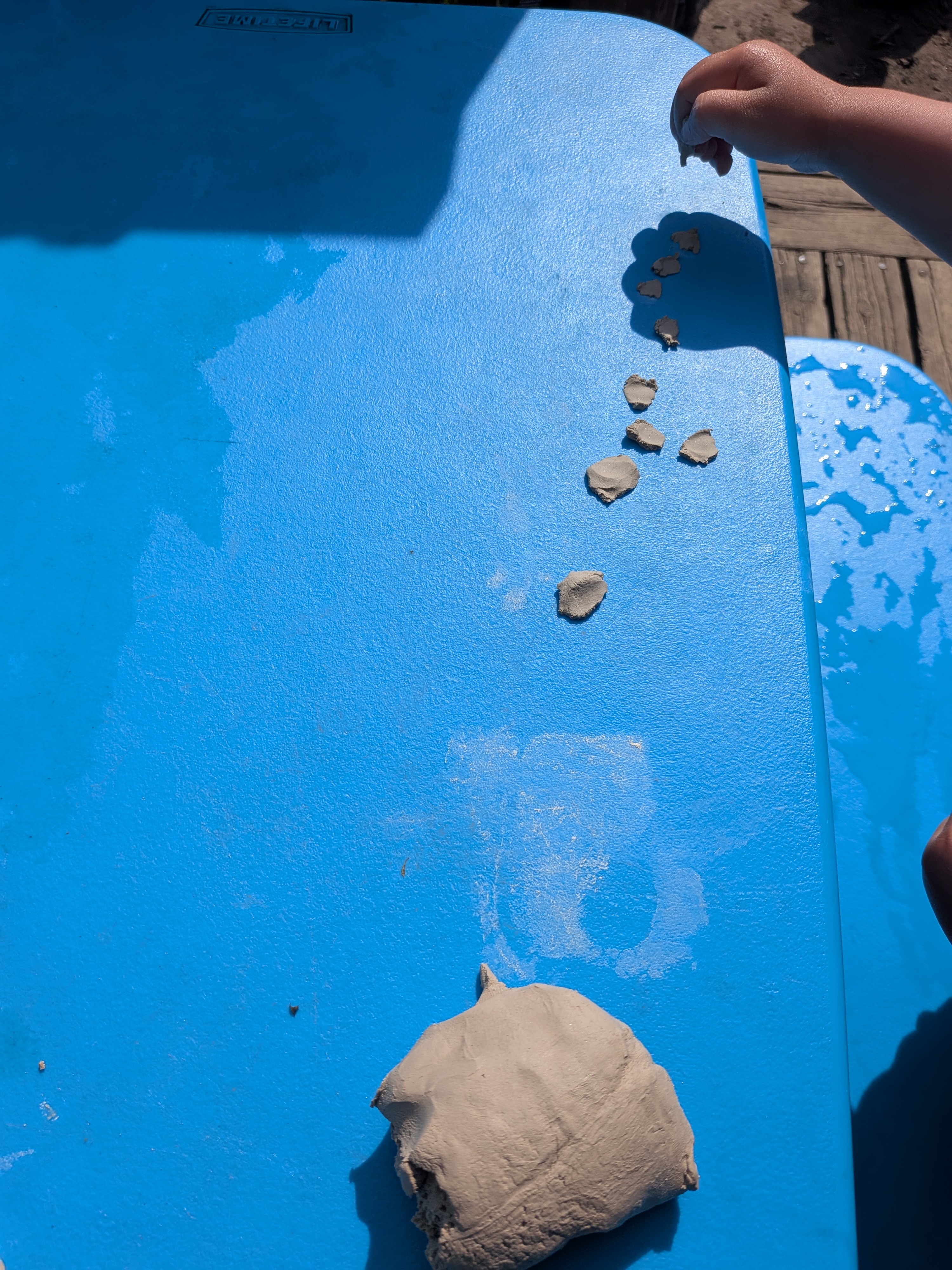
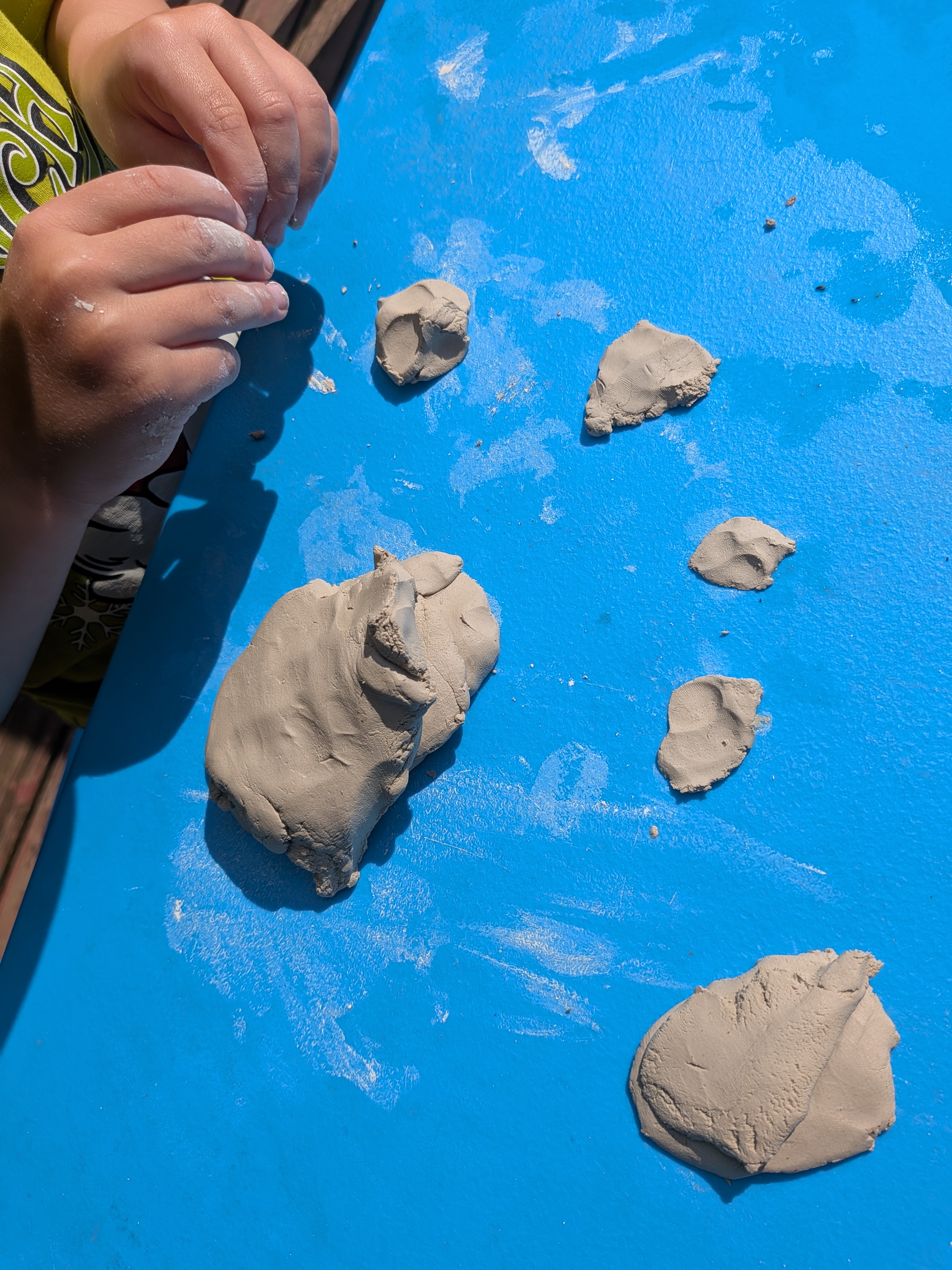
When clay appeared on the table for the first time, the question was immediate and completely reasonable: is it playdough?
It isn’t. More questions bubbled up: What is it then? Where does it come from? What does it do? Clay comes right from the earth, the finest particle in soil, smaller than sand, smaller than silt. It holds water, holds shape, and, as the children were already discovering with their hands, sticks to everything. The children explored it and we let the material speak for itself.
We revisited clay a second time during our soil study, because sometimes some subjects require deeper exploration — and clay was a medium that really interested the children.
This time, as we explored together, we talked about what clay actually does in soil: it is the sticky part, the glue that holds everything together and keeps plant roots anchored against rain and wind. As Bev Bos reminds us, “if it hasn’t been in the hand and the body, it can’t be in the brain.” So rather than just hearing it, children pressed wooden beads into balls of clay, standing in for roots finding their grip in the ground.
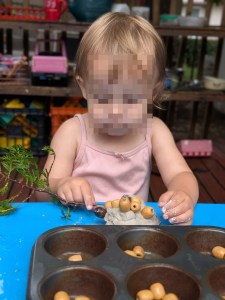
Cedar branches sat on the table alongside the clay as an invitation to explore. The intention was to represent plants and their relationship to soil, though the children found their own ways in, their own interpretations, and their own meanings.
The Books That Held the Science
Three books accompanied this inquiry, each doing something different.
Up in the Garden and Down in the Dirt by Kate Messner moved between two worlds, the visible and the hidden, above the surface and below it. It was a mirror for exactly what the children were learning: that the most important things are often the ones you have to get close to see.
Compost Stew by Mary McKenna Siddals gave language and delight to the idea of decomposition, that things breaking down is not an ending but a beginning. The children absorbed this more readily than any explanation could have managed.
And the Good Brown Earth by Kathy Henderson followed a grandmother and grandchild through a full growing season, tending a garden together across time and weather and patience. It held the whole inquiry in a single story: that soil is generous, that growing things takes time, and that the relationship between people and earth is one worth tending carefully.
Our Own Compost Stew
Inspired by the story “Compost Stew” by Mary McKenna, we decided to create our own compost. We used a transparent compost container so we could observe the decomposition process without the icky smells! The children filled the container themselves, layering soil and pressing orange and kiwi slices against the glass. Since they were the ones who filled it, the compost became theirs. They had created something, set a process in motion, and were so excited to see what happened next.
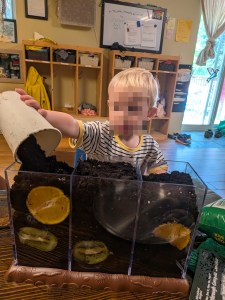
Within a single day, before anyone had thought to suggest it, children were back at the container with magnifying glasses.
Then, condensation began to appear. Moisture forming on the glass, sliding back down, the composter generating its own small water cycle as the fruit began its work of becoming something else. A conversation followed, kept simple and honest: decomposition produces moisture. That’s what you’re seeing.
And then the colours changed.
“It’s yuck.”
“I see blue.”
“I see green.”
“It’s water in there.”
Aesthetic judgement, colour identification, scientific inference.
There are many languages for knowing something, and every one of them counts.
The Underground World: Art Meets Science
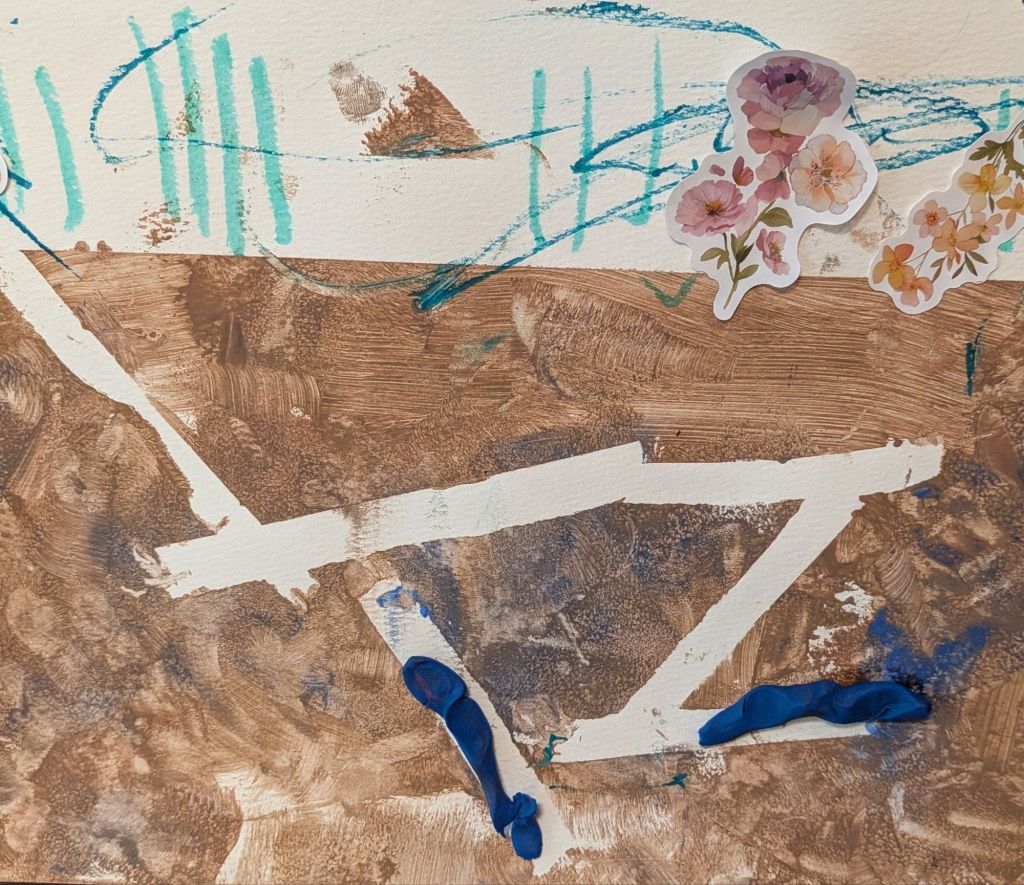
Ms. Monica, Sorrel & Cedar’s art teacher, brought the underground world to the surface through tape resist painting.
Using tape to create the negative space of tunnels, children painted the hidden architecture of soil, the passages and chambers that exist beneath every step we take. Then they sculpted bugs from plasticine to inhabit those painted worlds, bringing the ecosystem to life in two dimensions and three at once.
The conversation that accompanied the making was as important as the art itself. Some bugs tunnel through soil. Some add nutrients as they move. The ground is not inert. It is infrastructure, home, highway, and kitchen all at once.
A few days later we went to our outdoor classroom and saw some proof of what we had learned with our own eyes — there were small holes in the bare earth, barely the size of a pencil tip, made by ants doing exactly what Ms. Monica had described. The children knelt down without being asked. They looked closely. They understood, in the way that only direct experience teaches, that they had painted something real.
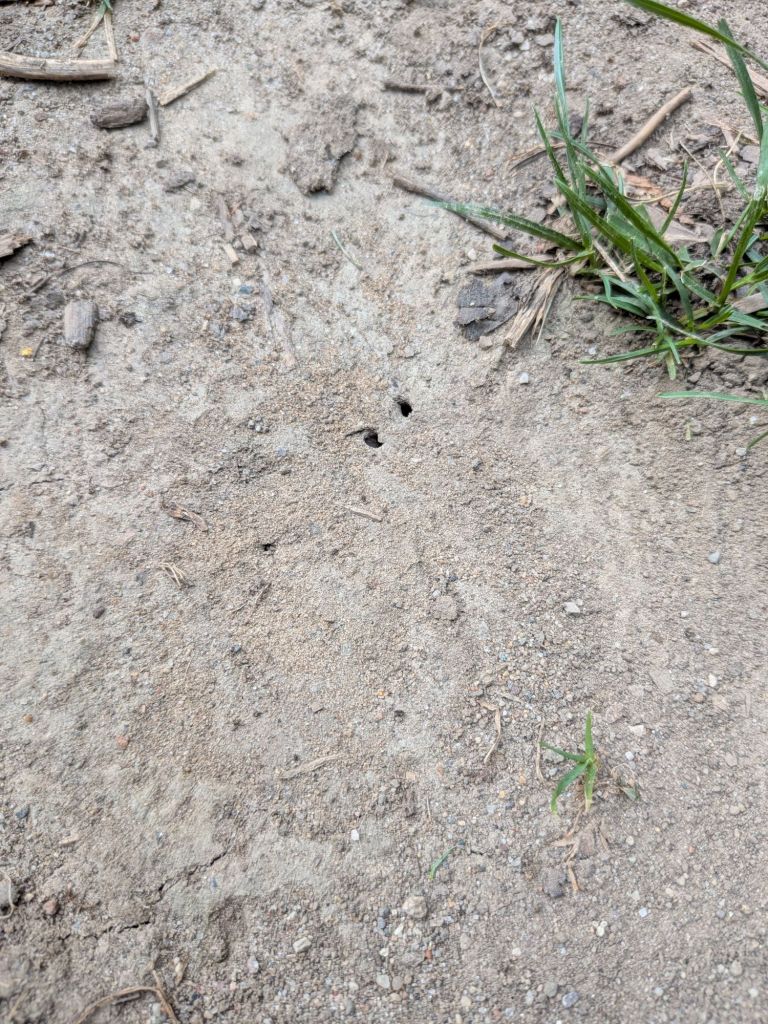
The teaching of Humility lived in that moment. We are not the centre of this place. We share it with beings much smaller than us who have been here longer and who matter just as much. Being careful where we step because it might be someone’s front door is not a metaphor. It is a practice.
This spot was marked so we could continue to observe.
Worm Trails: String and Paint
One more art invitation before the inquiry closed.
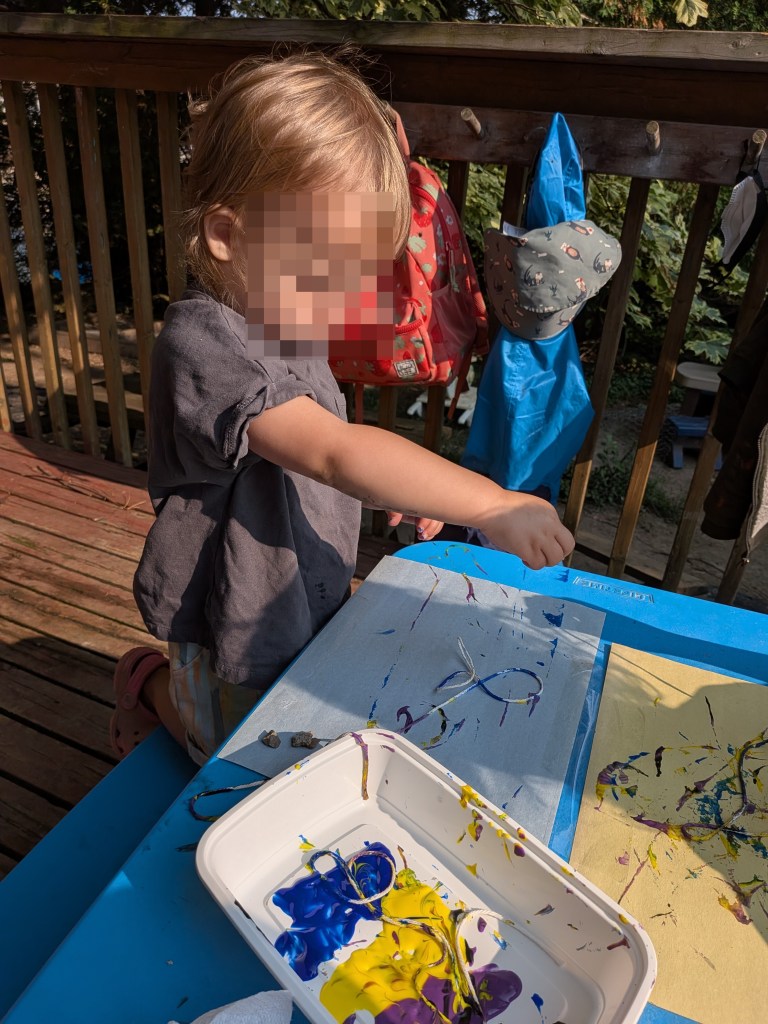
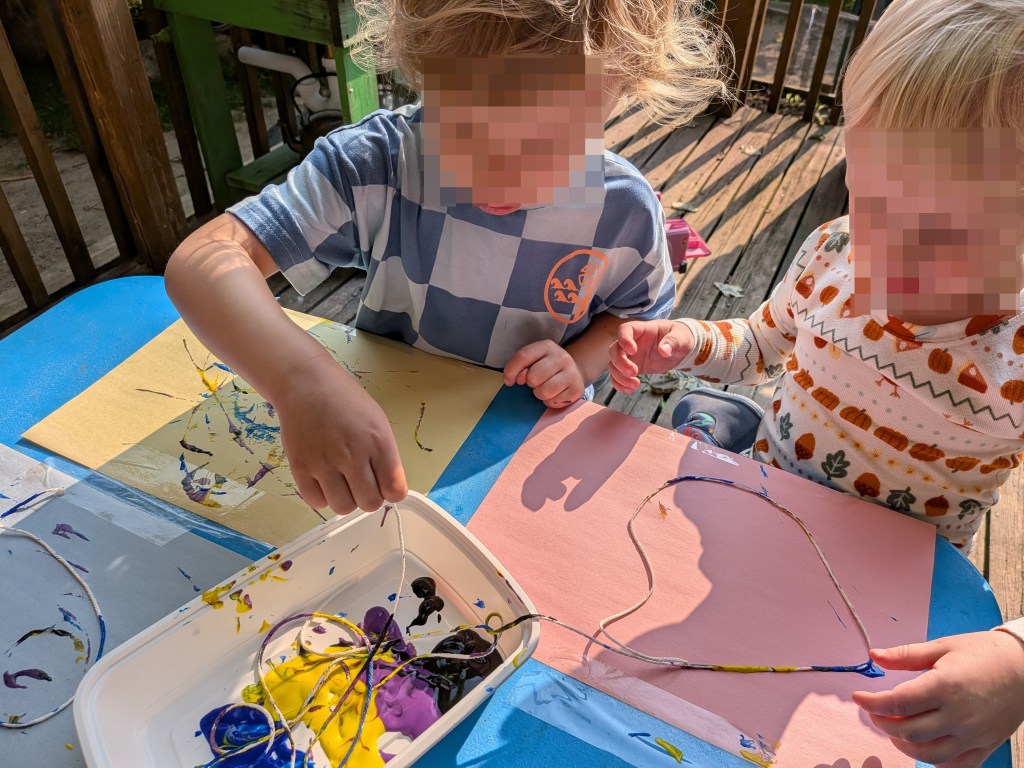
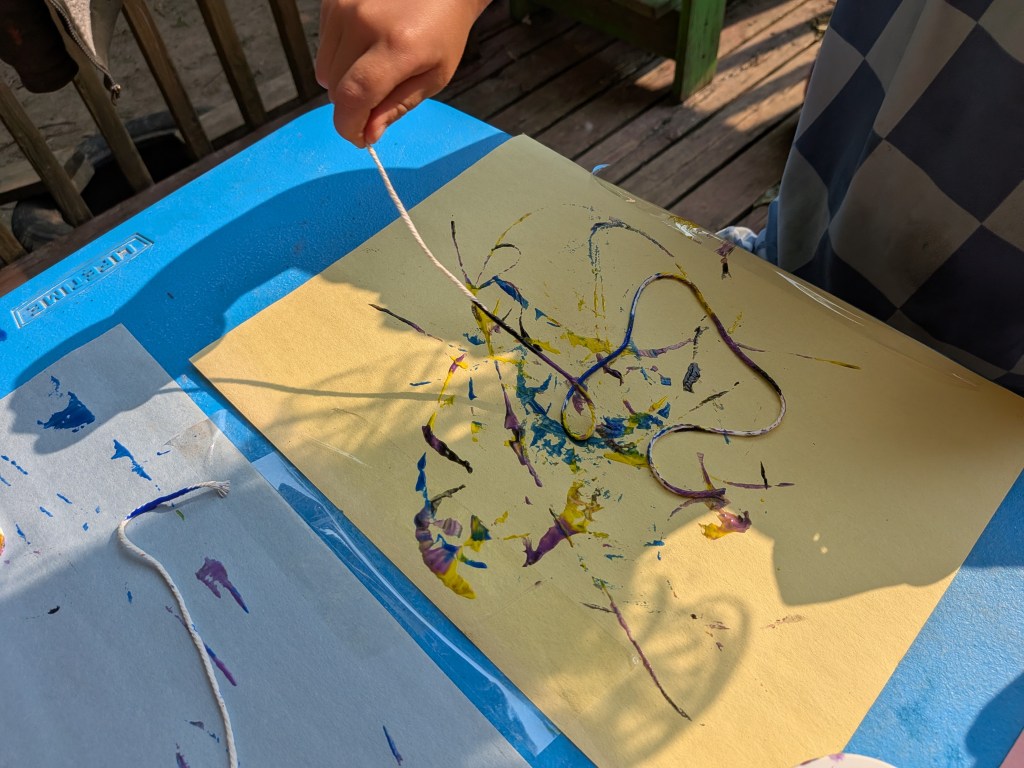
String dipped in paint, dragged and pulled across paper, leaving trails that twisted and looped and doubled back on themselves. Worm trails. Worm tunnels. The underground world made visible one more time, this time through the resistance of string on paper and the particular pleasure of not quite knowing where the line will go.
While hands worked, we talked about what worms actually do for soil. How they move through it, aerating and loosening as they go. How their castings enrich it. How a healthy soil is full of them, quietly doing essential work that nobody sees.
The Loop Closes
The fruit in the composter finished its work.
What had gone in as orange and kiwi slices came out as dark, rich, nutrient-dense soil. Nothing had disappeared. Everything had become something else, something useful, something that feeds what comes next.
We talked about this simply and directly: decomposition is not an ending. It is a gift the earth makes to itself.
Then we took that soil outside.
Children filled a planter, laid lettuce seed tape in careful rows, and watered it in with a pink elephant watering can. Two children, side by side, doing the work of gardeners who understand, even at three and four years old, that what you put into the earth comes back.
From a handful of backyard soil in a glass jar to lettuce seeds in a garden planter. From wondering what was in the dirt to knowing, in their bodies and their hands, something true about how the world works.
This is the teaching of Love. Not love as sentiment, but love as stewardship. As putting seeds in the ground because you believe something good will come from it.
The Lettuce Came Up
On the last day of the inquiry, the lettuce began to sprout.
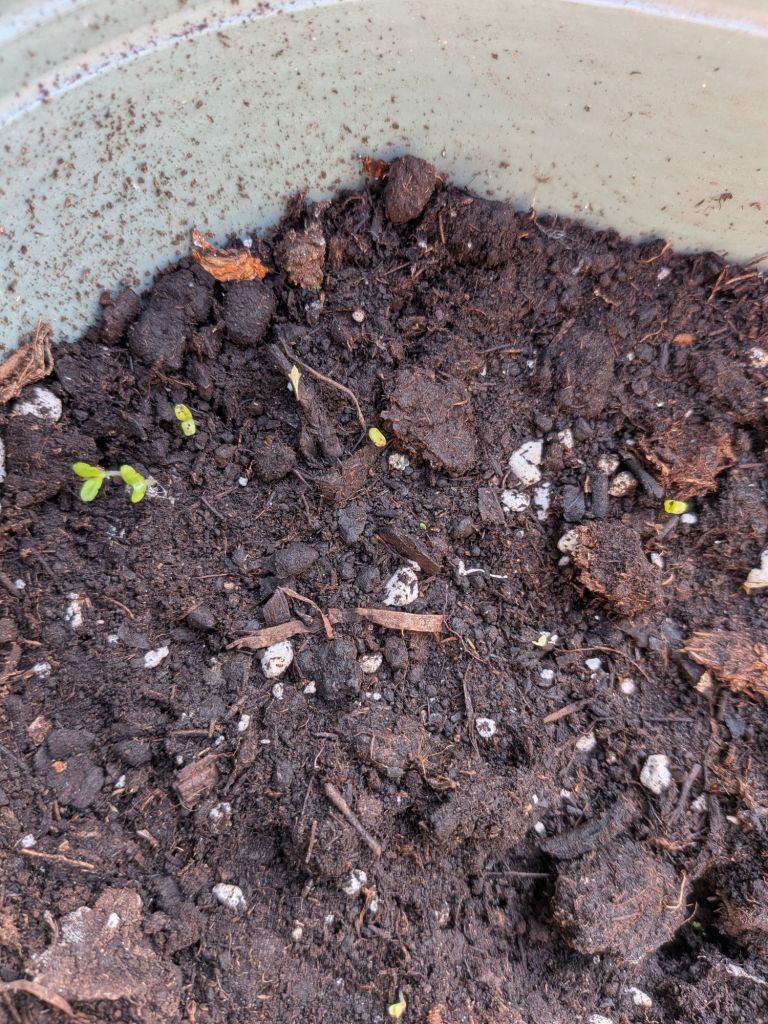
Tiny, improbable, determined little plants pushing up through the soil the children had filled, watered, and tended. The seeds they had pressed into the earth with their own hands were keeping their end of the bargain.
There was nothing left to explain. The soil had done what soil does, and the children had watched the whole thing from the beginning.
What the Children Showed Us
This inquiry touched every foundation of How Does Learning Happen?
Belonging. The composter, the terrarium, the ant holes, the garden tub, all of it became ours. The children spoke about these things with ownership and investment. This was not a unit study they observed. It was a world they participated in.
Well-Being. Hands in soil is one of the oldest forms of human regulation. Research supports what children seem to know instinctively: that contact with earth is good for you in ways that are hard to explain but easy to feel. This inquiry gave them that contact again and again.
Engagement. Nobody had to be convinced to check the composter. Nobody needed a reward for returning to the terrarium. The inquiry sustained itself because it was real, because living things were involved, and because the children were invested from the beginning.
Expression. Through clay, through paint, through plasticine, through string dragged across paper, through the precise and honest language of “it’s yuck” and “I see green” and “it’s water in there,” the children said what they knew in every way available to them.
Our inquiry started with mud and ended with lettuce pushing through the soil.
In between, the children learned that soil is not just dirt. It is memory, community, infrastructure, and life. They learned that decomposition is generosity. That the underground world is busy and worthy of respect. That small hands can participate in something ancient and important.
They put seeds in the ground, and the ground answered.

