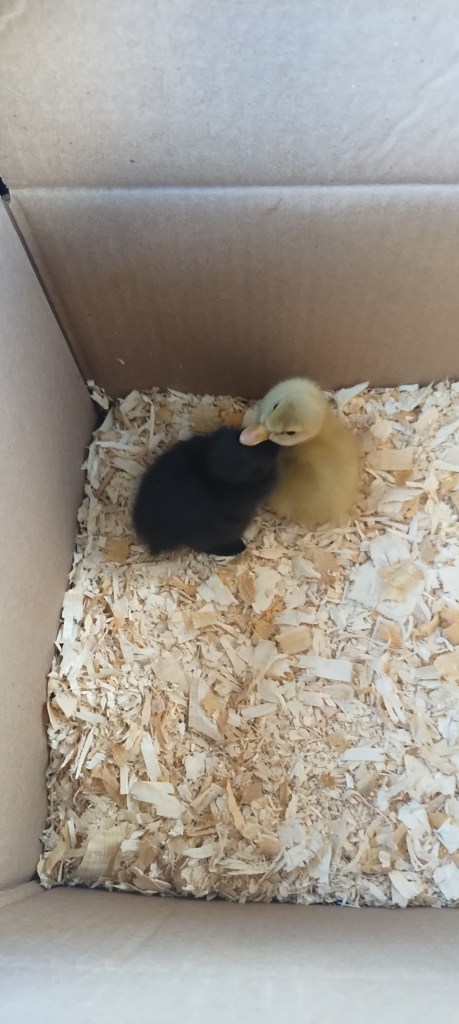
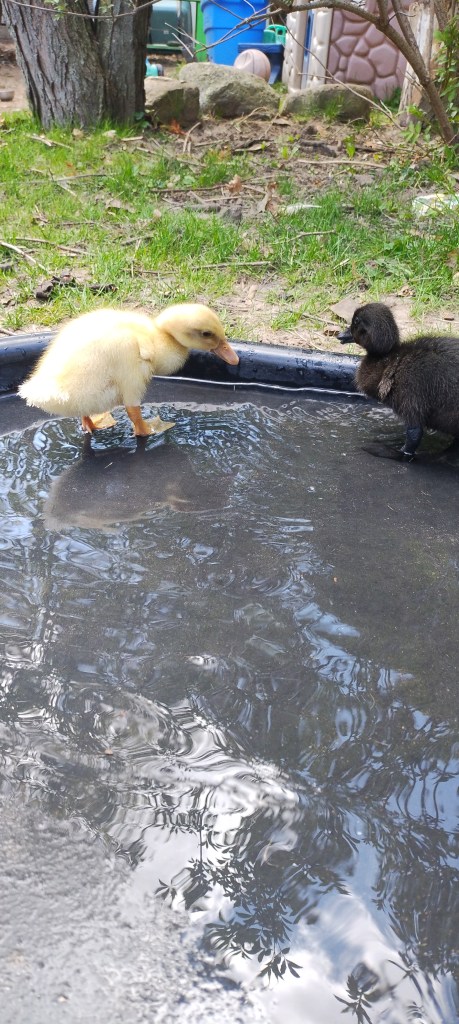
Cheese and Quackers came to Sorrel & Cedar for five weeks. Five weeks of soft peeping in the morning, of small hands learning to be gentle, of questions that tumbled out faster than I could write them down. Where’s their mama? Did they come from an egg? Why is one yellow and one black? Will they always be that colour?
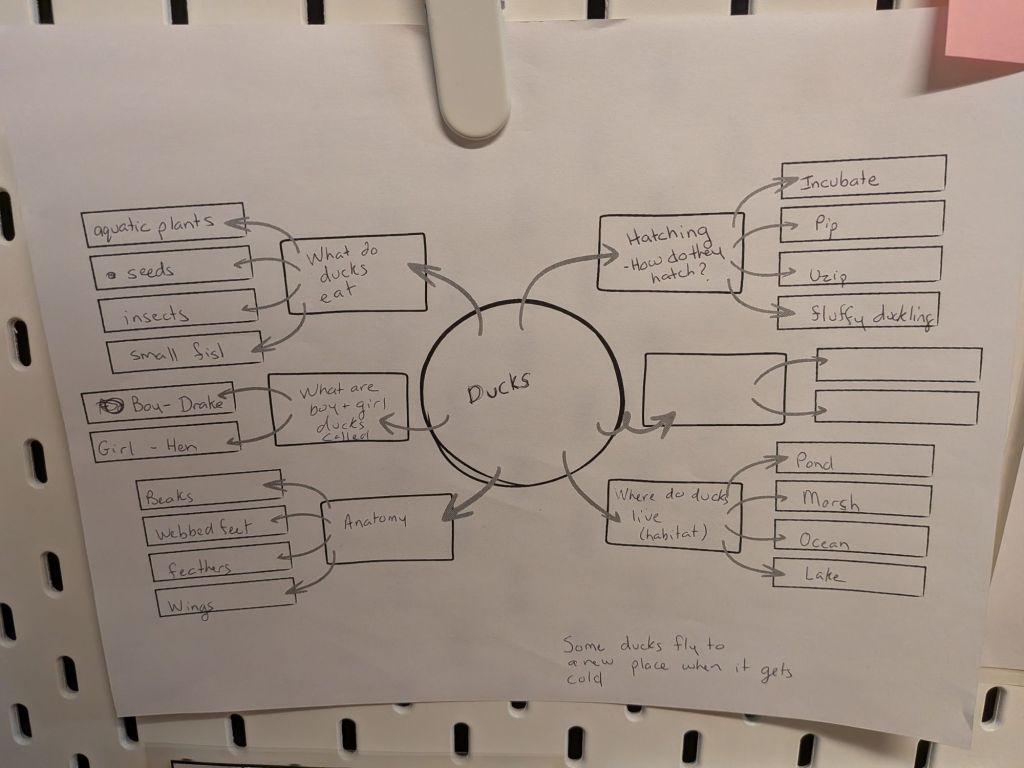
I didn’t rush to answer those questions for the children. Instead, we made a learning web together, a growing map of what we wondered and what we discovered. During our group meetings, the children brought their observations and curiosities to the table, and together we researched the answers. What do ducklings eat? How long does it take for a duck egg to hatch? Why do some ducks look different from others? The web grew week by week, filled in by small voices and shared discoveries.
Caring for Something Living
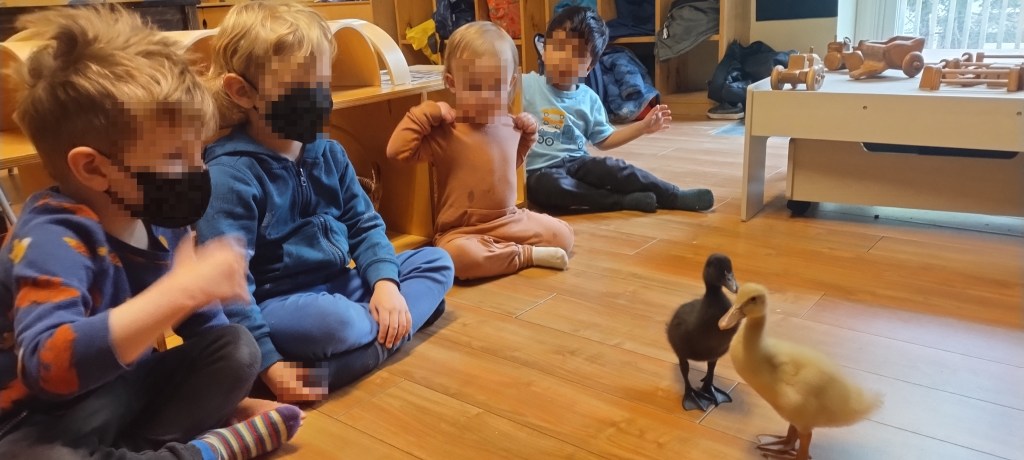
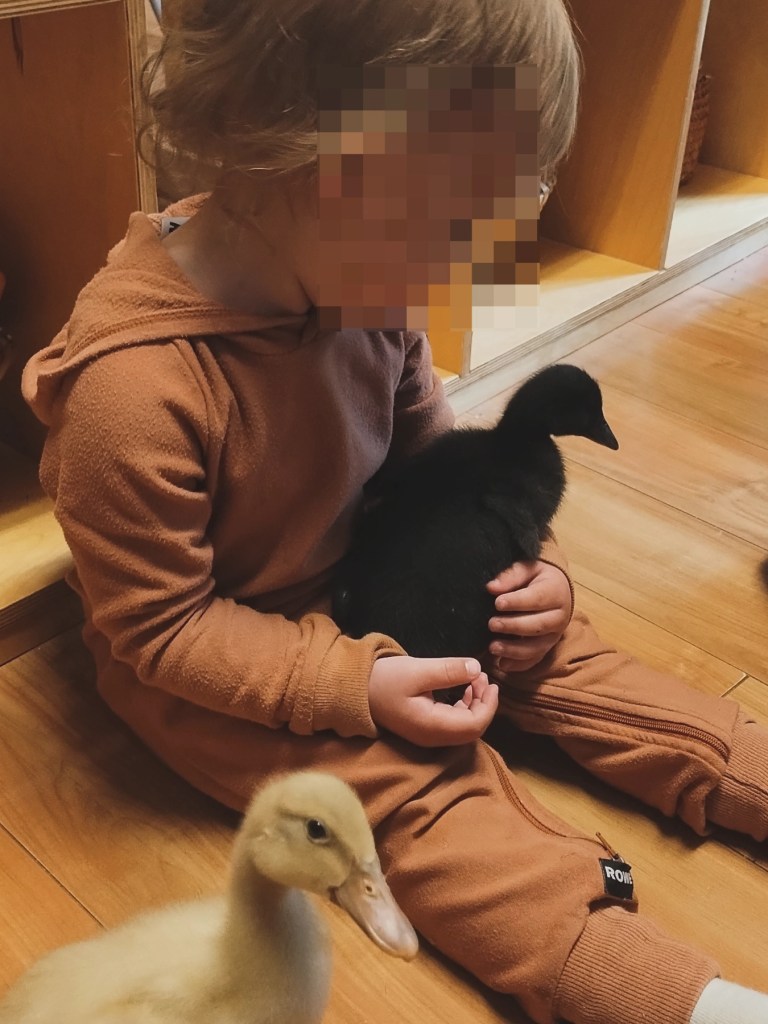
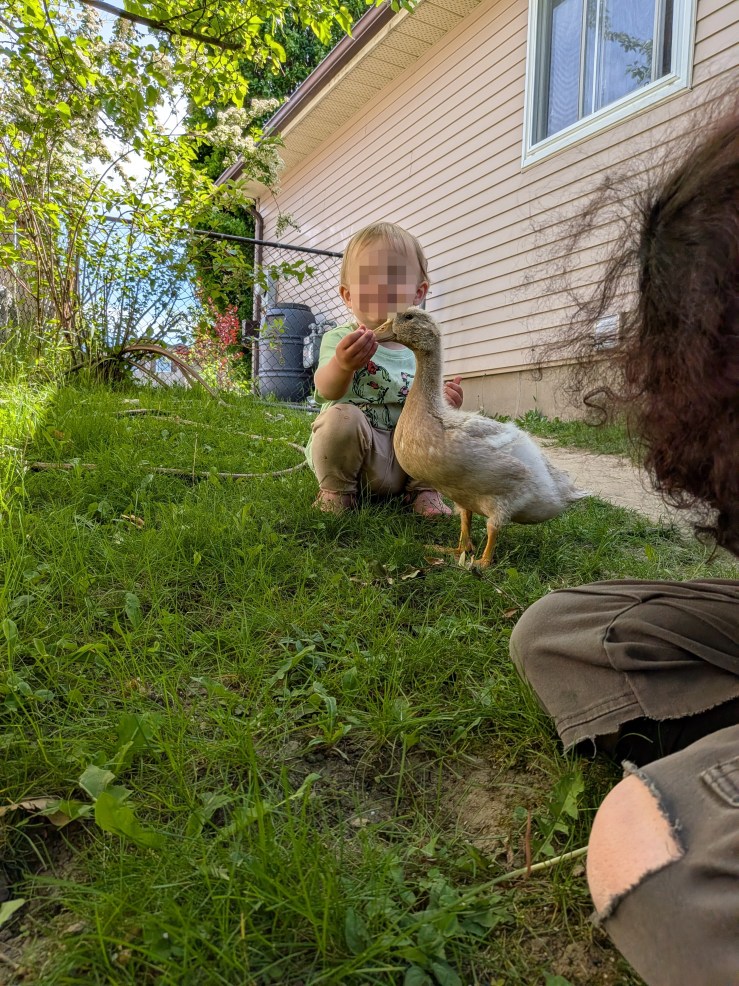
The children didn’t just observe Cheese and Quackers. They helped care for them. They cuddled with them. They sat still and felt the surprising warmth of a small creature pressed against a chest.
Some children were cautious at first, moving slowly and watching before reaching. Others were immediately, joyfully in. All of them were learning something that no planned activity could teach: that living things have needs, and that we are capable of meeting them.
This is Love in practice, one of the Seven Grandfather Teachings. Not love as a feeling only, but love as action. As showing up. As being careful with something that trusts you. The children learned that their presence mattered to these ducklings, and the ducklings mattered to them.
It is also Respect. The children learned to read the ducklings’ signals, to move quietly around them, to understand that care requires listening. You cannot cuddle a duckling on your terms alone. You have to meet it where it is.
Five Weeks: From Fluff to Feathers
What made this inquiry extraordinary was time.
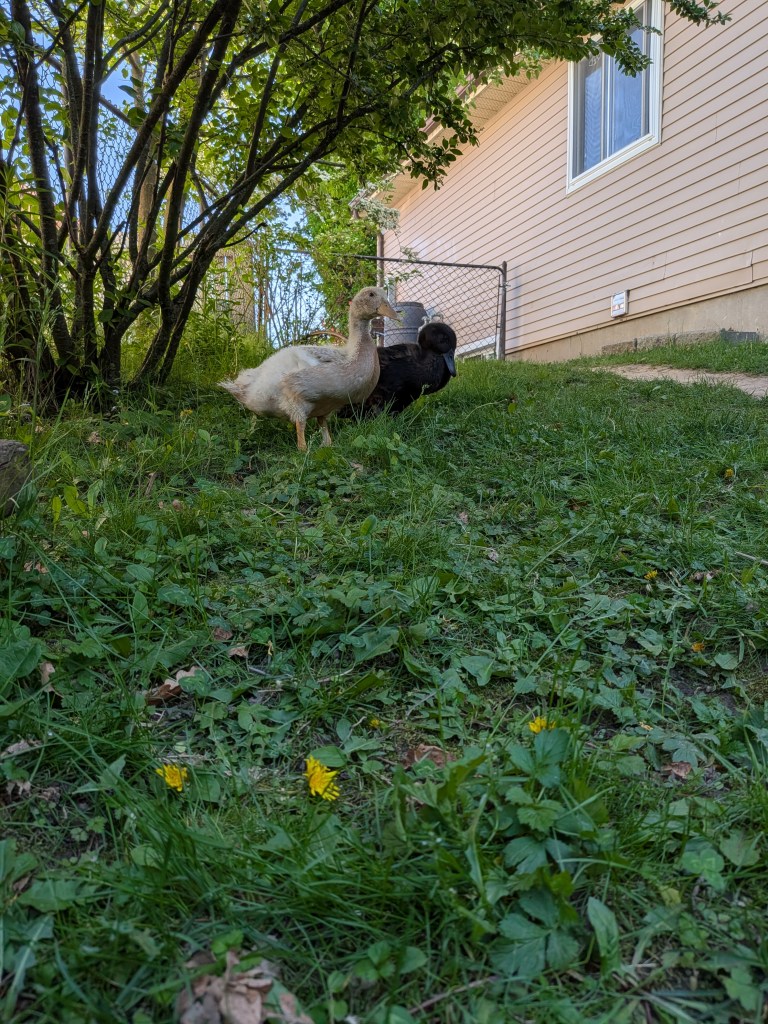
Five weeks is a long time in the life of a duckling, and it turned out to be exactly long enough for something remarkable to happen in plain sight. Week by week, Cheese and Quackers changed. The yellow fluff gave way to feathers. Their shapes shifted. Their movements became more deliberate, more duck-like. The children noticed every step of it, often before I did.
This is Truth. Not the truth of a book, but the truth of direct experience. The children didn’t need to be told that ducklings grow into ducks. They watched it happen. They held the evidence in their hands.
Two Invitations: Paint and Feathers
Alongside the daily, unhurried work of observing and caring, there were two simple creative invitations.
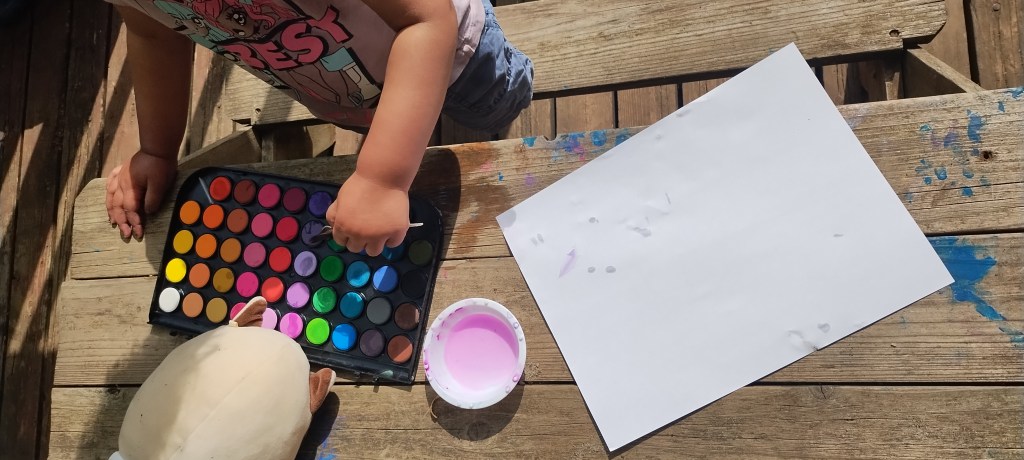
The first was yellow paint. Big paper, one colour, no instructions. The invitation wasn’t to paint a duck but to pay attention to what yellow feels like. What emerged was striking. The paintings were gestural and layered, full of movement, with sweeping strokes and thick pooled colour that echoed something the children had been studying up close: the soft, warm down of a duckling. They had looked so carefully that their hands knew things their words hadn’t caught up to yet.
One child stepped back from a finished painting and said: “I made a big one!”
That moment, the pride, the authorship, the sense of having made something real, is Expression in the fullest sense that Ontario’s How Does Learning Happen? describes it. Paint is a language. A brushstroke is a sentence.
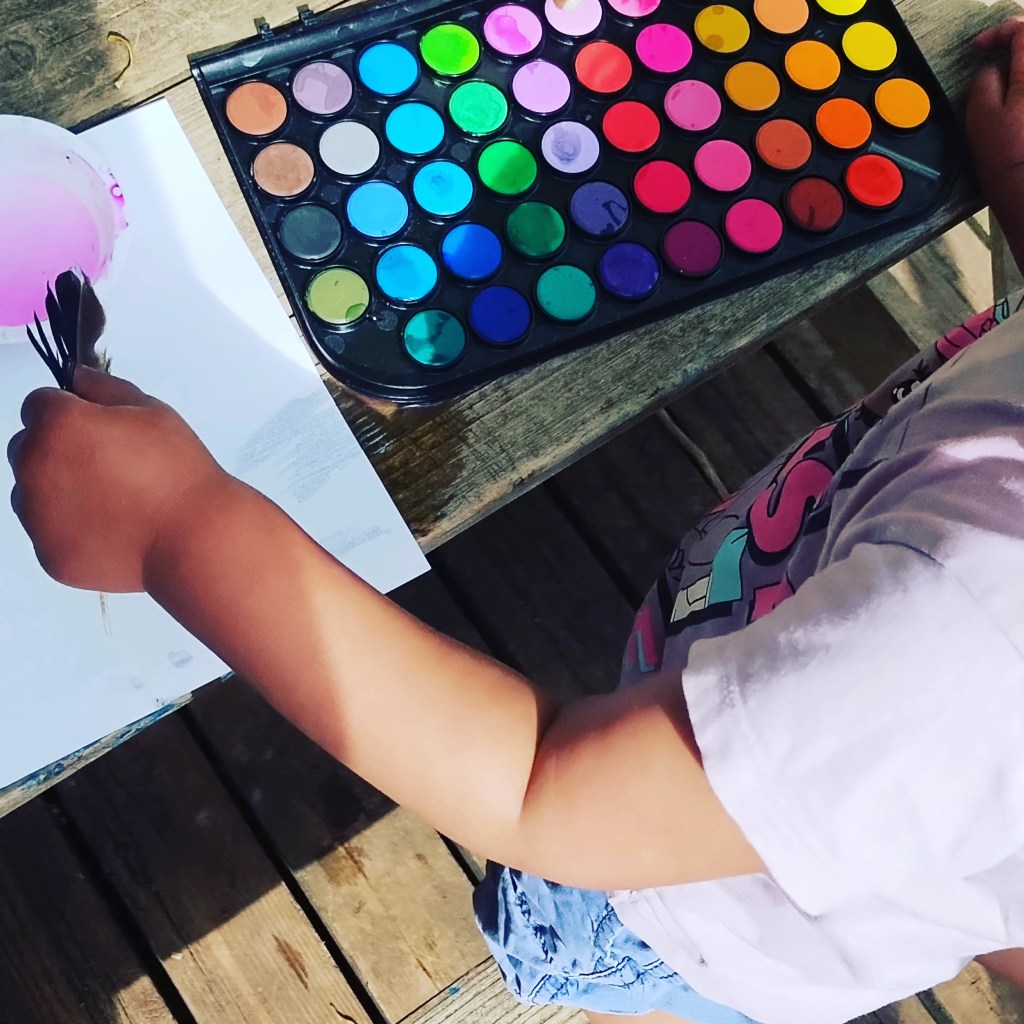
The second invitation came from an unexpected material: duck feathers. Painting with feathers and watercolour let the children feel the flex of a quill and the soft drag of barbs across wet paper. The feathers didn’t come from Cheese and Quackers themselves, but the connection wasn’t lost on the children. They were painting with the same remarkable structure their ducklings were slowly and visibly growing into. A small bridge between art and science, built almost without trying.
Mostly, We Observed and Loved Them
There is a temptation in early childhood education to fill every moment with a planned experience, to justify the learning with activities and documented provocations.
The heart of this inquiry was simpler than any of that.
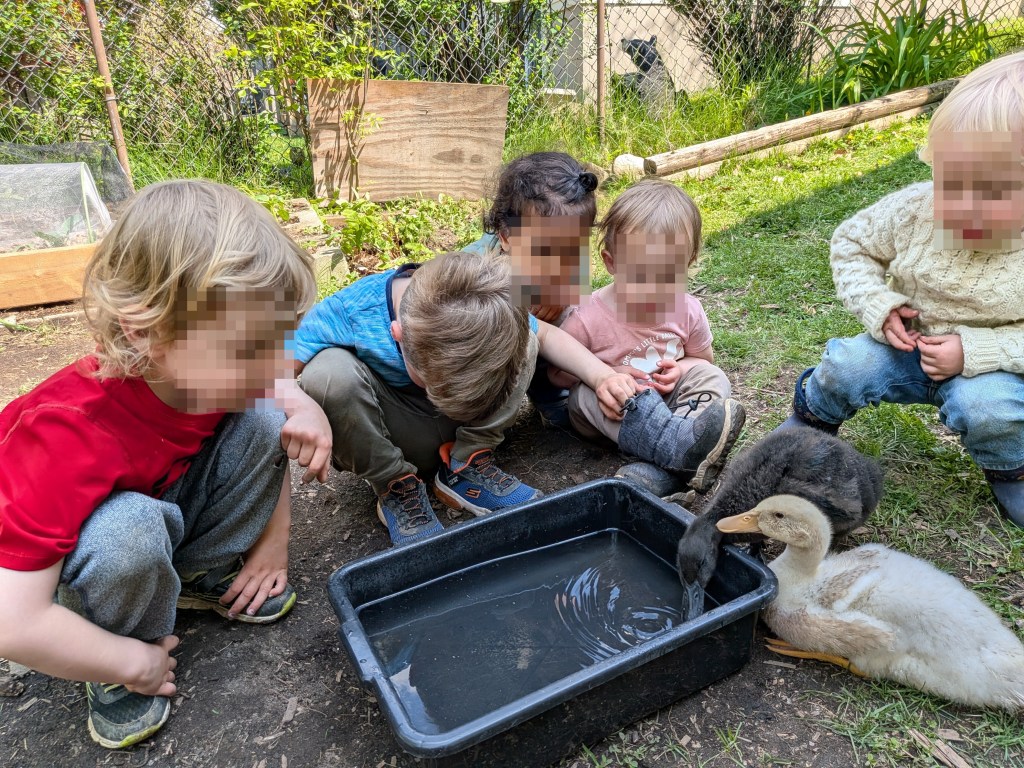
Mostly, the children sat with Cheese and Quackers. They watched. They noticed. They asked questions at unexpected moments, mid-snack, mid-story, mid-nothing-in-particular. They checked on them in the morning. They talked about them at pickup. They held them gently and were held, in a way, right back.
Humility, is the understanding that we are not above the natural world but part of it. Children seem to know this without being taught. They did not approach these ducklings as entertainment or curriculum. They approached them as neighbours. As beings deserving of care and attention.
Bravery, showed up in subtle but noticeable ways: in the child who wasn’t sure and reached out anyway, in sitting still when stillness was hard, in choosing gentleness even when excitement made it difficult.
And underneath it all, Wisdom, accumulated the way it always does in young children, slowly, through the body, through repetition, through being fully present with something real.
What the Children Showed
Across five weeks, the children demonstrated learning that touched every foundation of How Does Learning Happen?
Belonging. Cheese and Quackers became part of the community. The children spoke about them with ownership and warmth, calling them our ducklings. Caring for them together created connection not just between children and ducks, but between children and each other.
Well-Being. There is something genuinely settling about the presence of a small, warm, living creature. Children who were having a hard morning sought them out. The ducklings offered something quieting that couldn’t be manufactured.
Engagement. This inquiry sustained itself for five weeks without a single planned extension. The children brought it back again and again with new observations and new questions. That is what real engagement looks like. It doesn’t need to be renewed. It renews itself.
Expression. Through paint, through feathers and watercolour, through shouting “Quackers is getting big!” across the room, the children expressed what they knew in every way available to them.
Honesty in Small Hands
There were harder moments too, and I didn’t look away from them.
Children asked where Cheese and Quackers would go when they left. They asked whether ducks get lonely. One child wanted to know if ducks miss people. These questions were held with care and answered honestly, as best I could. I don’t know if ducks miss people. I do know that the children will remember these ducks.
Honesty, in its fullest form, means sitting with children in the questions that don’t have tidy answers. Trusting them to hold complexity. Not rushing to reassurance when what a child really needs is to be heard.
When They Left
Cheese and Quackers left the way you hope all good things do, known, loved, and ready. They are going to live with the grandmother of one of my students, somewhere with space and care waiting for them.
The children knew it was coming. Each one took time today to say goodbye, in their own way, in their own words. Some held them a little longer. Some just watched. There is something profound about a child choosing how to mark a farewell, with no prompting needed and no script. They knew what the moment asked of them.
The learning web will come down. The paintings will come down. But the learning, the moments shared with two small ducks named Cheese and Quackers, will leave indelible marks on their hearts.

